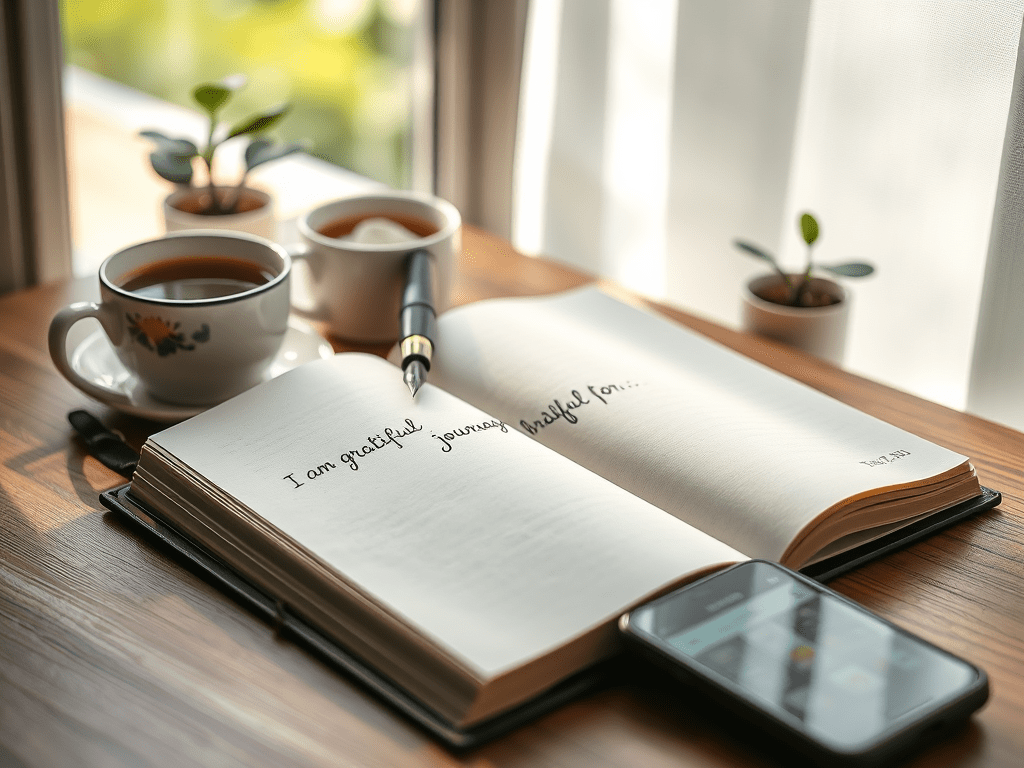
Sometimes we adopt a practice, knowing it’s meant to help, but it feels hollow. We go through the motions, hoping for change. Then, unexpectedly, in its own time, it quietly reshapes us.
For a long time, gratitude journaling was one of those practices for me. I understood the logic behind it. Yet, writing “I’m grateful for my friends” or “I’m grateful for sunshine” felt like an empty exercise. I wanted to feel grateful, but it didn’t feel meaningful.
Then, someone I trusted suggested doing it again. At this point in my life, I was frustrated by many things and caught in a downward spiral. It was a good time to stop dwelling on what was wrong and start noticing what was good. He said to list three things each day. Start each entry with “I am grateful for…” He also mentioned it was okay to repeat things.
I kept my list in OneNote because it was convenient. I could jot things down on my phone, tablet, or computer, wherever I happened to be. Sometimes I missed a few days, but I’d make up for it by listing more the next time. It never felt like a chore. I wasn’t trying to feel grateful. I was just remembering things that had happened and writing them down.
The Unexpected Shift
At some point, without me even noticing, gratitude stopped being something I wrote down and started being something I lived. Complaining felt unnecessary. I’d start to vent about something frustrating, but before I could even put it into words, the urge passed.
I found myself instinctively reframing situations in the middle of annoyances. A few days ago, I took a long drive home because I didn’t want to take the highway. It was tedious and time-consuming. However, instead of feeling irritated, I thought: Well, at least I’m getting to know parts of my town I’ve never seen before. And now I know not to trust Google Maps to lead me this way again.
I wasn’t trying to be positive, it just happened.
Gratitude Journaling and Mindfulness in Daily Life
What I’ve come to appreciate is that gratitude doesn’t look the same for everyone. I follow a Substack, Tell me Three Good Things, where the writer lists three good things every day. Readers can add their own gratitude to the comments. It’s not just about personal reflection, it’s about community. Everyone can see what others are grateful for. It also helps to be prompted to keep up with this daily practice.
In The Call to Courage, Brené Brown recalls her daughter leaving for prom. Overwhelmed, she kept repeating, “I’m so grateful.” Her son, puzzled, asked what was wrong. Her husband, knowing better, said, “Just let your mom be grateful.”
Brené Brown was reframing fear about her worry about her daughter stepping into the world into gratitude for the moment.
The Benefits of Practicing Gratitude
Looking back, I realize the biggest lesson wasn’t about journaling or even gratitude itself—it was about finding what works.
For me, it was making the process easy and not forcing myself to feel something profound every day. Over time, gratitude became less of a practice and more of a lens through which I see my life.
For others, it might be different. Maybe it’s writing daily, or sharing gratitude with others, or simply shifting perspective in the moment. Research on gratitude and mental health suggests that small, consistent efforts to cultivate gratitude can reduce stress. They improve mood and increase overall well-being.
How to Start a Gratitude Practice
If you’re looking for a way to incorporate gratitude into your routine, start small. A simple gratitude list can create noticeable shifts over time. A daily reflection can also help. Giving compliments is another way. Even saying “thank you” more often makes a difference. Mindfulness and gratitude often go hand in hand. They help you stay present and appreciate the moment. This prevents you from getting lost in frustration or negativity.
What about you? Have you found a way to practice gratitude that feels natural? Or does it still feel like an obligation?
I’d love to hear your thoughts. If you’re up for it, take a moment today. Notice something small that you’re grateful for. Just see where it leads.
 Possibility & Light
Leave a comment